
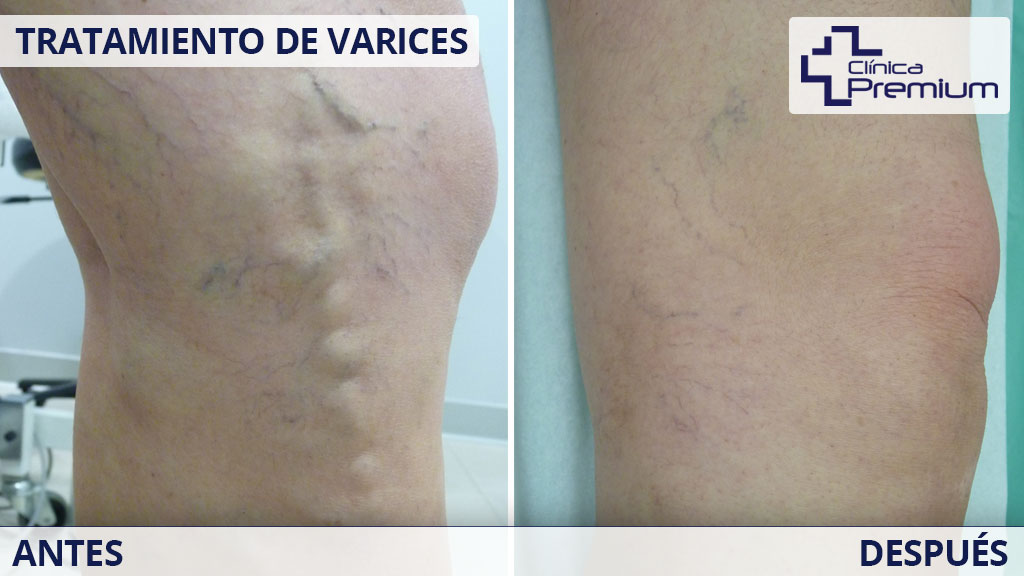
The presence of varicose veins with a diameter greater than 8mm is a warning sign of a significant circulatory problem, This usually indicates a failure in the valve system (vein gates) that allows high pressure in the main vein connected to that valve.
Over the years, this produces a significant reversal of blood flow in that vein and a dilation and progressive branching of it with the appearance of new large varicose veins.
In addition, the system of veins that are still functioning properly becomes overloaded and over time veins or valves that were originally fine may progressively begin to fail.
The pressure in the veins is greater the closer they are to the ankle. Therefore, in cases of venous insufficiency of this type, the first varicose veins begin to appear in this area. Over time, the pressure becomes so high and sustained that it causes chronic skin damage, including darkening of the skin and chronic skin suffering, which can lead to complications. The associated pain is not directly related to the severity of the condition; there can be advanced cases with almost no symptoms.
Complications
Complications of varicose veins, although not common in all cases, can include:
- Venous ulcers: Extremely painful ulcers can form on the skin near varicose veins, especially on the ankles. These ulcers are caused by the long-term accumulation of fluid in the tissues, resulting from increased blood pressure within the affected veins. A discolored patch on the skin usually appears before an ulcer develops.
- Thrombophlebitis and venous thrombosis: Occasionally, varicose veins with circulatory problems and valve failure allow a clot to form within the vein, causing acute inflammation in the area. If the clot forms in a deep vein, it is worse, as it obstructs blood flow through this main artery, and in such cases, the affected leg can swell considerably. Any sudden leg swelling warrants urgent medical attention, as it may indicate a blood clot—a medical condition known as thrombophlebitis if the clot is in a superficial vein and deep vein thrombosis if it is in a major vein.
- Venous bleeding: Occasionally, very superficial varicose veins with high pressure can rupture. This can cause heavy bleeding, and although it can be controlled by elevating the leg and applying pressure to the affected area, it usually requires medical attention.
Currently, this type of varicose vein can be treated without open surgery using modern techniques such as endovascular treatments, foam sclerotherapy or laser, among other minimally invasive procedures, taking advantage of the technological advances available in current vascular medicine.