
Varicose veins are veins that swell and become deformed because they have been under a lot of pressure. higher than normal pressure for a long time. This causes the veins to widen and sometimes become twisted. When this happens, blood flow within the veins slows down on its way back to the heart. In some cases, the blood may even flow backward, which worsens the problem.
Varicose veins are much more common in the legs because, when we stand, these veins withstand more pressure than in other parts of the body. Below, we explain their causes, types, and treatments according to their size.
Why do varicose veins occur?
The most common causes include family history, hormonal changes, lack of physical activity, being overweight, and spending a lot of time standing or sitting. All of these factors weaken the veins in the legs, preventing them from functioning properly and leading to the development of varicose veins.
Types of varicose veins and treatments
The varicose veins They can be classified according to their size, and the treatment It can vary depending on the type:
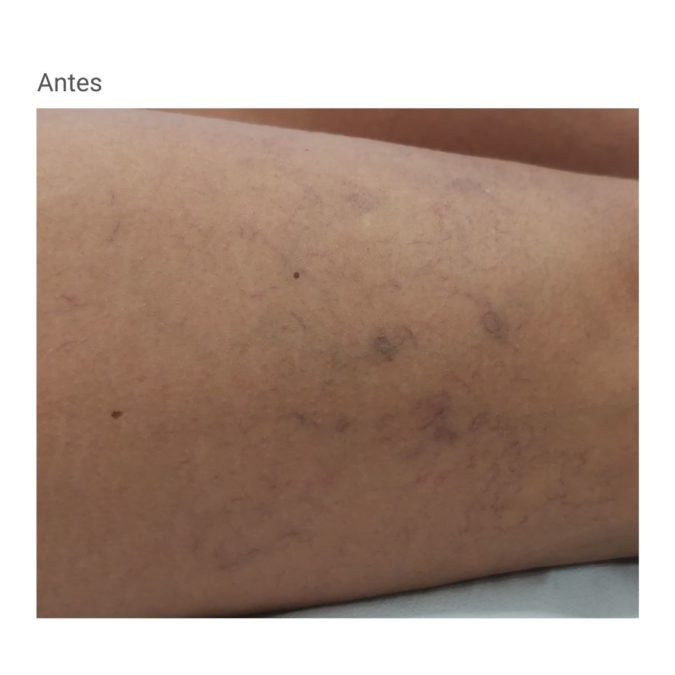
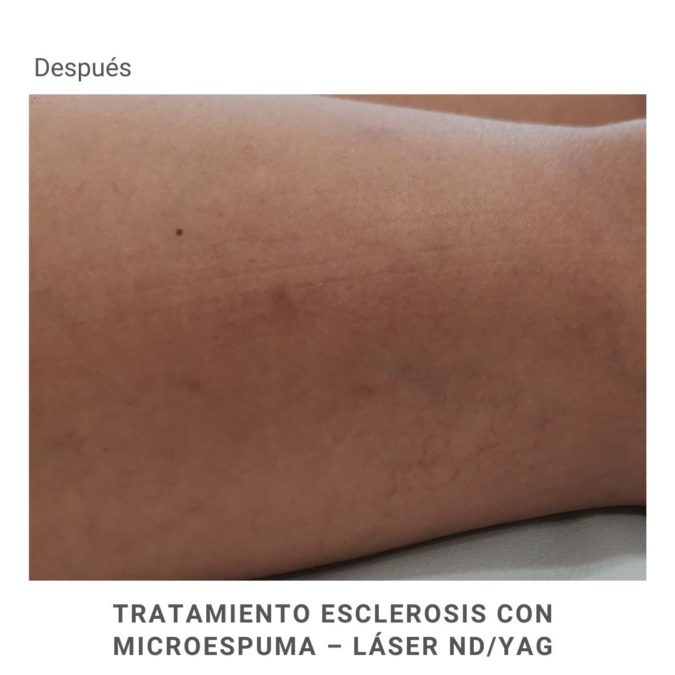
- Small varicose veins (telangiectasias or spider veins): They affect 30% of the population and are generally asymptomatic. This type of varicose vein is effectively treated with an external vascular laser (Nd:YAG), which emits high-energy light that penetrates the skin and is absorbed by the hemoglobin in the varicose vein, closing the diseased vessel. Each laser pulse produces slight discomfort, usually well-tolerated, although in some cases an anesthetic cream is applied beforehand. For the treatment to be effective, it is necessary to have previously treated any larger varicose veins.
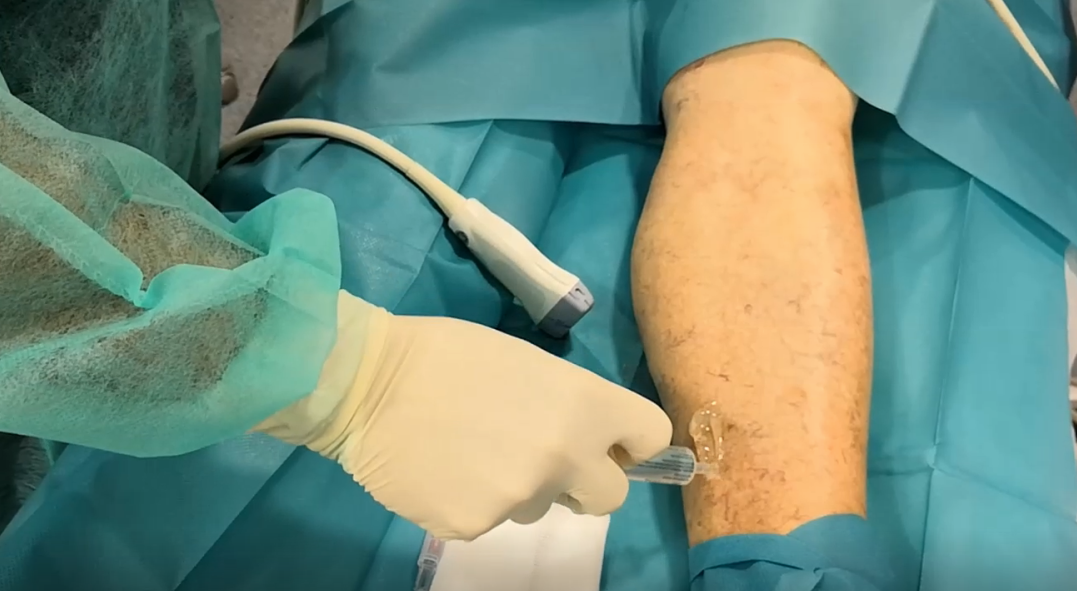
- Medium-sized varicose veins (reticular): These are varicose veins approximately 2-4 mm in diameter, located beneath the skin, so they are often not visible to the naked eye. The most effective treatment is... foam sclerotherapy, which consists of injecting a substance into the varicose vein to close it and promote its disappearance.
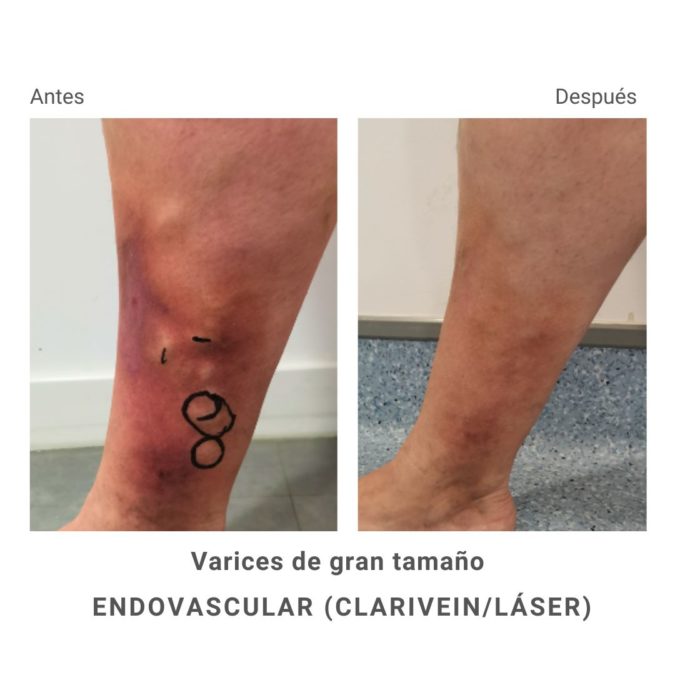
- Large varicose veins: These are varicose veins larger than 8 mm, usually symptomatic (heaviness, pain, swelling, or skin changes). They are visible as thick cords under the skin and are often related to valve problems.
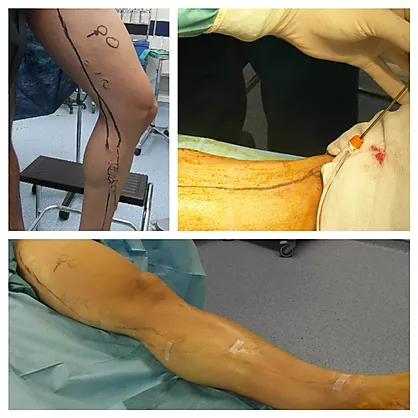
The most effective treatment is minimally invasive surgery through radiofrequency or endoluminal laser, This procedure works from inside the vein, closing it off. Currently, these procedures are performed under local anesthesia, on an outpatient basis, and with minimal discomfort.
Is it necessary to treat varicose veins even if they don't cause discomfort?
Yes. Although they may not initially cause pain or discomfort, varicose veins tend to worsen over time. The constant pressure within the vein promotes its growth and the appearance of new varicose veins in the area.
If left untreated, the problem can spread, making treatment more complex and prolonged. Therefore, early intervention is recommended.
What happens if varicose veins are left untreated?
If left untreated, varicose veins can progress to a chronic venous insufficiency, with symptoms such as edema (swelling) and changes in skin color, which can turn ochre due to the deposition of hemoglobin.
In advanced cases, they may appear venous ulcers, Open wounds, generally located above the ankle, caused by a lack of oxygenation in the tissues.
Despite these complications, there are effective treatments that allow the problem to be corrected from its origin through advanced surgical techniques.
What happens to circulation after treatment?
The treatment does not eliminate healthy veins, but rather acts on varicose veins, which are diseased veins that are not functioning properly. Blood is redirected to healthy veins that are functioning correctly, thus improving circulation.
How many sessions are needed?
- In large varicose veins with valve failure, a single session of minimally invasive surgery is usually sufficient.
- In reticular veins and spider veins, between 1 and 5 sessions may be necessary, combining sclerotherapy and external laser.
- The number of sessions is determined after a medical evaluation and Doppler ultrasound study.
Discover more about treatments to eliminate varicose veins.
Phlebology Unit
Dr. Javier Pérez Diez